Goodbye to Senior Driving Exemptions – Canada is preparing for a major shift in road safety rules as senior driving exemptions come to an end starting 10 January 2026. For years, older motorists in certain provinces benefited from relaxed renewal requirements, but growing safety concerns and demographic changes have prompted authorities to act. The new policy introduces mandatory vision tests for senior drivers, aiming to balance independence with public safety. This change affects thousands of older Canadians who rely on personal vehicles for daily mobility, healthcare access, and social connection. Understanding how the new system works will help drivers prepare and avoid disruptions.
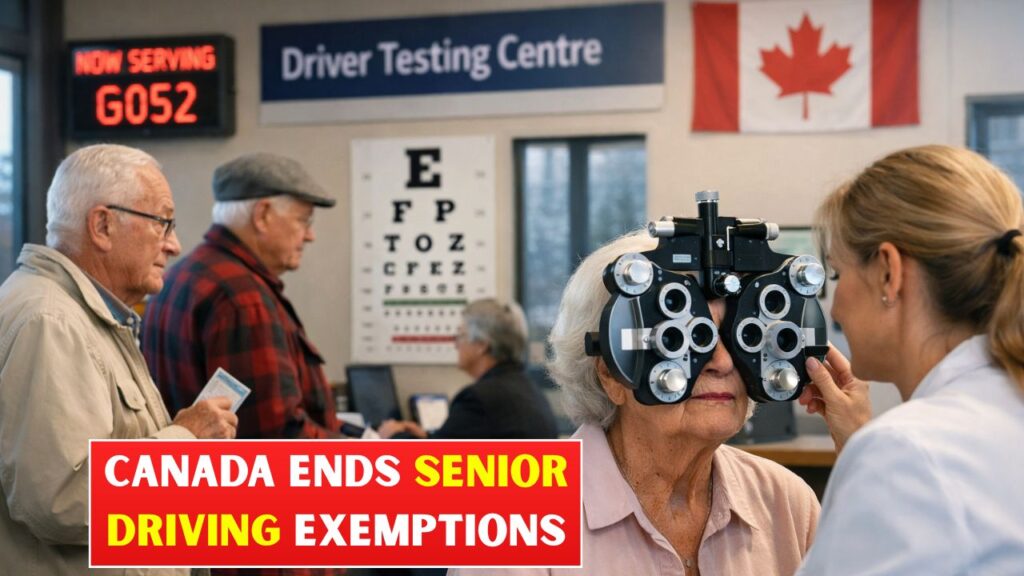
Mandatory Vision Tests for Canadian Seniors Explained
The introduction of mandatory vision tests marks a significant update to senior driver regulations for Canadian seniors. From 10 January 2026, older drivers renewing their licences will need to complete standardized eyesight checks, regardless of past exemptions. The goal is to identify vision-related risks early, such as reduced peripheral awareness or difficulty with night driving. Canadian seniors are encouraged to view this as a preventive measure rather than a penalty. Authorities emphasize that passing a vision test does not automatically require giving up driving privileges; instead, it helps determine whether restrictions, corrective lenses, or follow-up assessments are needed to ensure safer roads.

End of Driving Exemptions Across Canada’s Provinces
Across Canada’s provinces, the removal of senior driving exemptions creates a more uniform licensing framework. Previously, rules varied by region, leading to confusion and uneven enforcement. With the updated policy, provincial transport departments will apply consistent standards to older motorists. This shift supports fairness while addressing the realities of an aging population. Across Canada, officials highlight that most seniors will continue driving without issues after meeting vision requirements. The change also aligns Canada with other developed nations that already require periodic vision checks for older drivers as part of routine licence renewal.
 Goodbye to Low Child Benefits as Canada Child Benefit Rises to $7,800 Per Year from 10 January 2026
| Category | Details |
|---|---|
| Start Date | 10 January 2026 |
| Affected Group | Senior drivers aged 70+ |
| New Requirement | Mandatory vision test at renewal |
| Test Location | Approved clinics or licensing offices |
| Possible Outcomes | Pass, restricted licence, or follow-up exam |
Senior Licence Renewal Changes for Older Canadians
For older Canadians, the licence renewal process will now include clearer steps and guidance. Vision testing will be integrated into regular renewal schedules, reducing last-minute surprises. Older Canadians who already wear corrective lenses can continue driving as usual if they meet the minimum standards. Transport authorities recommend scheduling eye exams early to allow time for updates if needed. This proactive approach helps seniors maintain independence while adapting safely to age-related changes. Overall, the renewal changes aim to protect both drivers and the wider community without imposing unnecessary hardship.
Road Safety and Vision Screening in Canada
Road safety remains the primary motivation behind Canada’s decision to enforce vision screening for seniors. Studies consistently show that good eyesight is critical for reaction time, hazard detection, and overall driving confidence. In Canada, policymakers stress that vision tests are not designed to remove drivers from the road unfairly but to ensure everyone meets basic safety thresholds. By identifying issues early, seniors can access treatment or adapt their driving habits. This balanced approach supports safer roads while respecting the mobility needs of an aging population.
Frequently Asked Questions (FAQs)

1. When do mandatory vision tests start in Canada?
The new requirement begins nationwide on 10 January 2026.
2. Who must take the vision test?
Senior drivers, generally aged 70 and above, renewing their licences will be required to comply.
3. Does failing a vision test mean losing a licence?
No, it may result in restrictions, corrective measures, or further assessment instead of immediate suspension.
4. Where can seniors complete the vision test?
Tests can be done at approved medical clinics or designated licensing offices.